
You wash your face before breakfast. By lunchtime, it looks oily again. So you wash it again. Later, your cheeks feel dry, but your forehead is still shiny. What exactly is going on?
Welcome to one of skincare’s most confusing situations: your face feels like it needs less oil and more moisture at the same time.
It’s tempting to respond by changing your cleanser, adding a scrub, or washing more frequently. But what if the very thing you’re doing to make your skin feel cleaner is leaving it less comfortable?
The tricky part is that over-cleansing doesn’t always announce itself immediately. Sometimes, it starts with a little tightness after washing. Sometimes, your usual products begin to sting. And sometimes, you simply find yourself adding more steps without understanding why your skin isn’t feeling any better.
Let’s look beyond the usual skincare rules and figure out when cleansing helps, when it may be too much, and how to find a routine that makes sense for your skin.
1. The 10-Minute Test: What Happens After You Wash Your Face?
Most people judge their cleanser while they’re using it. Does it foam enough? Does it remove the day’s grime? Does their face feel fresh immediately afterwards?
But there’s another moment worth paying attention to: what happens after you leave the bathroom?
Imagine washing your face, drying it gently, and getting on with your morning. Ten minutes later, your cheeks feel tight. You smile, and your skin feels as though it needs a little more comfort.
That sensation may be a sign that your cleanser is too harsh for you, or that your cleansing routine is leaving your skin dry.
Clean skin shouldn’t have to feel uncomfortable.
Instead of judging a cleanser by how squeaky-clean your face feels, notice whether your skin remains comfortable after washing. A suitable cleanser should remove everyday impurities without unnecessarily stripping the skin.
Your next move: If tightness keeps returning, reconsider the cleanser, water temperature, and frequency of washing before adding another product to your routine.
2. Why Does Your Face Get Oily Again When You’ve Already Washed It?
You start the morning with a freshly washed face. Then you commute, work, check your reflection, and notice that familiar shine around your nose.
Naturally, you wonder whether your morning cleanse was pointless.
It wasn’t.
Your skin continues to produce sebum after cleansing. How much oil you notice depends on several factors, including your skin type, environment, and individual biology. Washing removes excess oil from the surface, but it doesn’t switch off your skin’s natural oil production.
This is where people can get caught in a frustrating cycle: wash away the shine, notice it returning, and wash again.
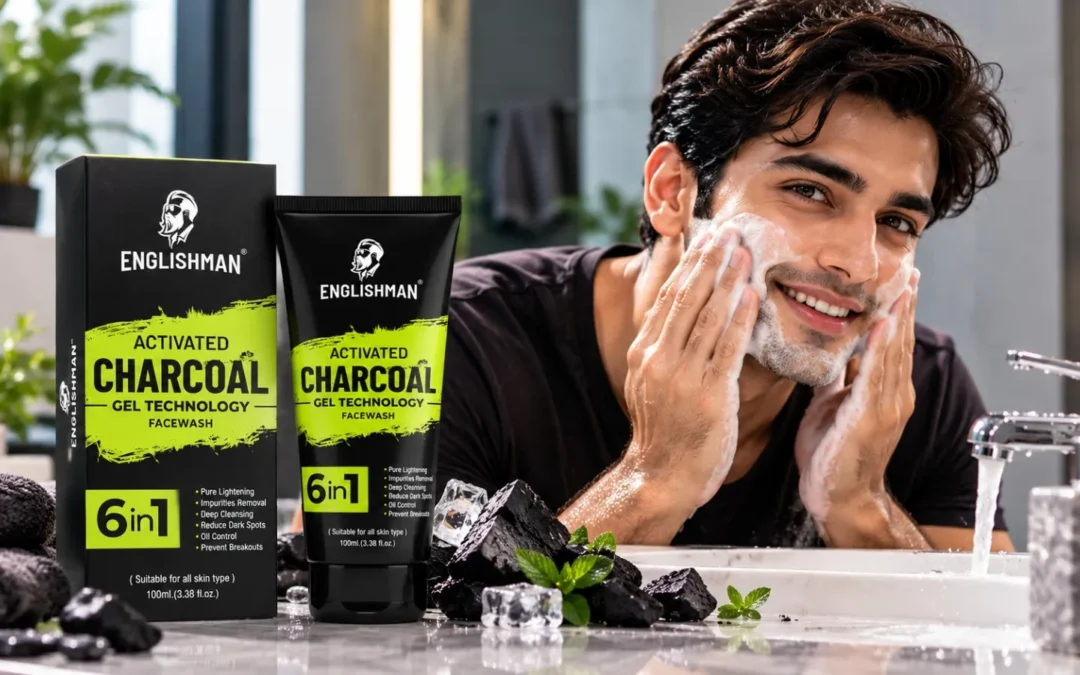
If excess oil is a regular concern, choose a cleanser that suits your skin rather than trying to remove every trace of oil. A charcoal face wash may be an option to explore, depending on its formulation and your skin’s needs, but charcoal isn’t automatically better or stronger than every other cleanser.
The interesting part? A shiny forehead doesn’t necessarily mean your face is dirty. Sometimes, it simply means your skin is doing what skin naturally does.
3. Your Coffee Face Wash and Coffee Scrub Aren’t Doing the Same Job
Coffee might be your favourite way to wake up, but coffee-inspired skincare deserves a little more thought than choosing whichever product sounds strongest.
A coffee face wash is designed for cleansing. It helps remove surface impurities and excess oil according to its formulation.
A coffee face scrub serves a different purpose: exfoliation. Depending on its ingredients, a scrub can help remove dead skin cells from the surface, but physical exfoliation also requires care.
Here’s a common mistake: using both products together every morning because the combination seems like a more thorough way to clean the skin.
More steps don’t necessarily mean better results.
Excessive exfoliation can leave the skin irritated, particularly if you’re already using a cleanser that doesn’t suit you or other products that cause dryness.
Think about what your skin actually needs. On an ordinary morning, cleansing may be enough. Exfoliation can be a separate step, used according to the product directions and your skin’s tolerance.
A useful rule: Don’t add a scrub simply because your skin doesn’t feel as smooth as you’d like. Give your skin a chance to remain comfortable between exfoliation sessions.
4. The Charcoal Question: Does a Deeper Clean Always Mean Better Skin?
Black cleansers have a distinctive look, and charcoal-based products often catch the eye when you’re shopping for skincare.
But the colour of a cleanser doesn’t tell you how it will perform.
A charcoal face wash and an activated charcoal face wash may have similar intended uses, yet their performance depends on the full formulation, including the cleansing agents and other ingredients.
Activated charcoal has a porous structure that can adsorb certain substances under appropriate conditions. However, that doesn’t mean every charcoal cleanser removes every impurity, detoxifies your skin, or produces better results than a well-formulated alternative.
The more useful question is whether the product cleanses effectively while leaving your skin comfortable.
If your face feels tight, flaky, or irritated after using a cleanser, don’t assume the discomfort proves that the product is working. Check its directions and consider whether you’re washing too frequently or combining it with other potentially irritating products.
Remember: A good cleanser doesn’t have to feel aggressive to do its job.
5. When Your Skin Needs a Reset, Not Another Product
Picture this: your cheeks feel dry, your forehead is shiny, and your usual skincare suddenly doesn’t seem to sit comfortably on your face.
You respond by buying a new cleanser, adding a scrub, and trying a different moisturiser.
Now you have three new variables and no clear idea which one your skin needs.
Before making another purchase, consider simplifying your routine.
A hydrating face wash may be worth considering if your current cleanser leaves your skin feeling dry or tight. Choose a formula appropriate for your skin, follow the directions, and remember that the word “hydrating” on a label doesn’t guarantee that every product will suit everyone.
You can also pause unnecessary exfoliation, use a suitable moisturiser, and introduce new products gradually.
If irritation persists or becomes significant, seek professional advice rather than continuing to experiment.
Your skin doesn’t need a complete makeover every time it has a difficult week. Sometimes, simplifying your routine makes it easier to identify what’s actually helping.
6. The Skincare Shelf Audit: Are You Using Everything You Own?
Here’s a small challenge. Look at your bathroom shelf and count how many products you use simply because they’re there.
Perhaps there’s a cleanser you bought after seeing an online recommendation. Maybe there’s a scrub you use whenever your skin looks dull, even though you’re not sure how often you’re supposed to use it.
Owning several face care products isn’t necessarily a problem. The important thing is understanding what each product does and whether it belongs in your routine.
A practical starting point is to separate your products into three groups:
- Everyday essentials: Products such as a suitable cleanser, moisturiser, and sunscreen.
- Targeted additions: Products intended to address a specific concern, introduced according to their directions.
- Occasional products: Exfoliants and other treatments that don’t necessarily need to be used every day.
The same thinking applies when choosing men’s skin care products. A routine doesn’t need to become more complicated simply because it’s designed for men. Skin type, shaving habits, and personal needs are more useful guides than the label alone.
Try introducing only one new product at a time. This makes it easier to notice how your skin responds and identify anything that causes irritation.
The goal isn’t to own fewer products at any cost. It’s to stop using products without knowing why you’re using them.
7. How Often Should You Actually Wash Your Face?
There’s no universal schedule that suits every person perfectly.
For many people, cleansing in the morning and evening is a reasonable starting point. Others with dry or sensitive skin may prefer a gentler approach in the morning. After heavy sweating or exercise, cleansing may be useful to remove sweat and accumulated impurities.
What matters is how your skin responds and whether your routine fits your needs.
If you’re washing repeatedly throughout the day because you notice a little shine, consider whether another wash is necessary. If your skin feels consistently tight or irritated, reconsider the products and techniques you’re using.
And don’t forget that washing your face isn’t the only part of skincare. Moisturising helps support the skin barrier, while sunscreen protects against UV exposure.
The right frequency is not the maximum number of times you can wash your face. It’s the routine that cleanses your skin without leaving it persistently uncomfortable.
The Bathroom Mirror Challenge: Three Questions to Ask Tomorrow
Before changing your routine, try this simple experiment for a few days, provided your current products aren’t causing irritation.
Question 1: How does my skin feel after washing?
Notice whether it feels comfortable or repeatedly becomes tight, flaky, or irritated.
Question 2: Am I cleansing because I need to, or because I noticed a little shine?
Not every change in your skin’s appearance requires another wash.
Question 3: Can I explain why I’m using each product?
If you’re combining several cleansers, scrubs, and treatments without a clear purpose, it may be time to simplify.
These observations won’t diagnose a skin condition, but they can help you recognise when your routine may need adjusting.
So, Is Your Skin Clean or Over-Cleansed?
The answer isn’t hiding in how much foam your cleanser produces, how long you scrub, or how tight your face feels afterward.
It’s in the bigger picture: how your skin feels, how it responds to your products, and whether your routine is helping you maintain comfortable, healthy-looking skin.
You don’t need to eliminate every trace of oil. You don’t need to exfoliate whenever your skin looks dull. And you certainly don’t need to buy a new cleanser every time your routine feels confusing.
Start by paying attention to your skin rather than fighting against it.
Because the best cleansing routine isn’t the one that leaves your face feeling stripped of everything. It’s the one that leaves your skin clean, comfortable, and ready for the rest of your day.